
How Your Dog Connects With Your Feelings After Retirement
Retirement changes everything — your schedule, your purpose, and the quiet rhythm of your days. Some of that change feels like freedom. Some of it feels unexpectedly heavy.
What catches many retirees off guard is how much their dog seems to know. The surprising way your dog connects with your feelings after retirement goes far beyond simple loyalty or routine. Science is starting to explain what dog owners have sensed for years.
This bond deepens after retirement for specific, measurable reasons — and understanding them can genuinely change how you care for yourself and your dog.
How Does a Dog Sense Its Owner’s Emotions After Retirement?
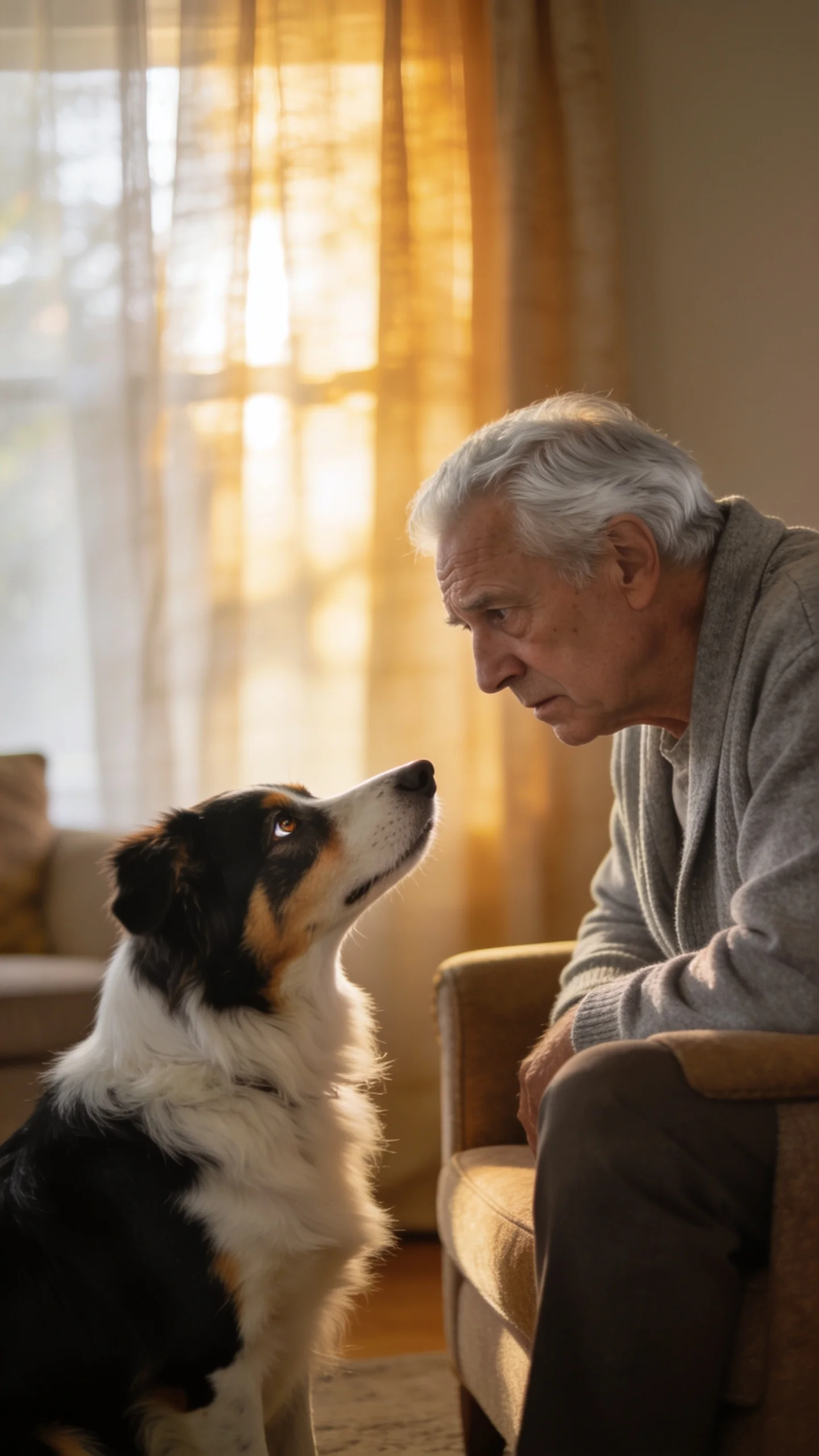
Dogs detect human emotional states through scent, body language, and vocal tone — all three at once, simultaneously. After retirement, when you spend significantly more time at home, your dog has far more data to read, and the bond recalibrates around your new emotional baseline.
- Dogs can smell cortisol changes linked to stress, per a 2022 Queen’s University Belfast study.
- They track micro-expressions and posture shifts humans rarely notice themselves.
- Retirement increases at-home hours, giving dogs more exposure to your emotional range.
- Dogs mirror owner anxiety — a process researchers call emotional contagion.
- Positive owner moods correlate with calmer, more relaxed dog behavior.
The more time your dog spends with you, the more precisely it reads you — for better or worse.
The Science Behind Your Dog Reading Your Stress
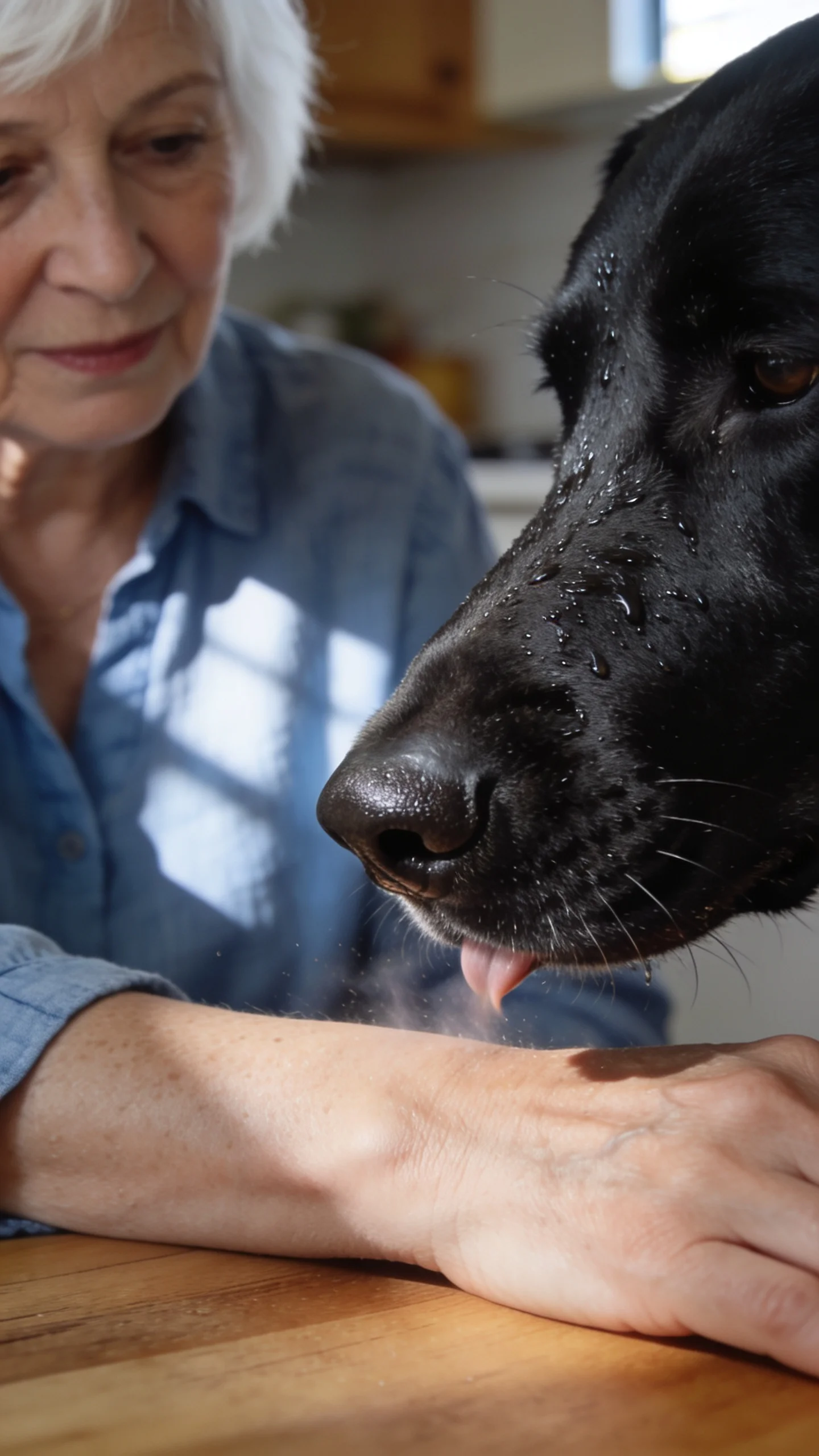
A 2022 study published in PLOS ONE by researchers at Queen’s University Belfast confirmed that dogs can identify stress in humans by smelling breath and sweat samples alone — with no visual cues at all. This was the first peer-reviewed evidence that dogs detect the physiological, not just behavioral, signs of human stress.
What Your Dog Actually Detects
When cortisol rises in your body — as it does during anxiety or emotional adjustment — your scent profile shifts. Dogs have up to 300 million olfactory receptors compared to a human’s 6 million, according to the American Kennel Club.
BEFORE YOU SCROLL PAST
Quick Reads You’ll Love: 👇
👉 Can You Power Tool Specific Items Essebtials
Retirement is a major life transition, and cortisol fluctuations during this period are well-documented in gerontology research. Your dog is essentially reading a biochemical diary of your adjustment — without you saying a word.
“Dogs are very sensitive to changes in their human’s emotional state. They pick up on subtle cues — scent, movement, sound — in ways that still surprise researchers.” — Dr. Clara Wilson, Queen’s University Belfast, 2022
The Role of Oxytocin
Eye contact between dogs and owners triggers oxytocin release in both species, according to a 2015 study in Science by Nagasawa et al. at Azabu University in Japan. This is the same bonding hormone released between human parents and infants.
After retirement, longer days at home mean more of these bonding moments accumulate. The oxytocin loop strengthens, which partly explains why retired owners often describe feeling closer to their dogs than ever before. A interactive dog puzzle toy can extend these shared engagement moments throughout the day.
Why Retirement Specifically Changes This Bond
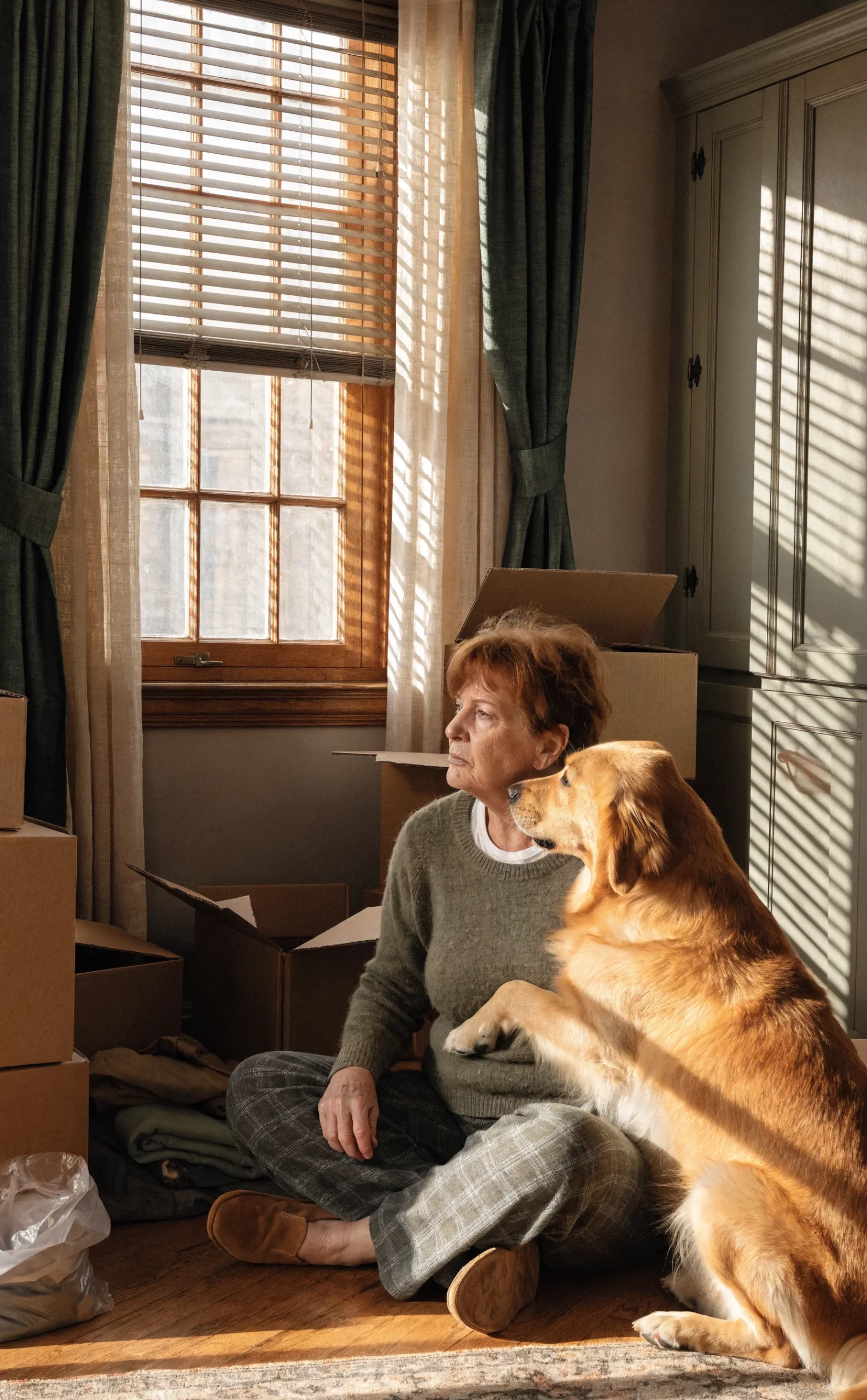
Before retirement, your dog adapted to your absence. It learned your departure cues, napped during your work hours, and greeted your return with practiced enthusiasm. Retirement disrupts that entire learned pattern.
- Dogs experience a reset period when routines change significantly.
- Your presence all day shifts from exception to norm within weeks.
- Dogs recalibrate emotional baselines around the owner now home full-time.
- Separation anxiety can temporarily increase before the new routine stabilizes.
A 2020 review in Frontiers in Veterinary Science found that dogs develop stronger emotional dependency when owner availability increases. That dependency is not weakness — it is attunement.
Your dog is not just happy you are home. It is actively learning a new version of you.
The Identity Shift Your Dog Tracks
Retirement often brings identity adjustment — the shift from professional role to open-ended days. That internal process shows up in your posture, your pace, your tone of voice. Dogs register all of it.
Research from the University of Lincoln (2016) found that dogs distinguish between happy and angry human faces and respond differently to each — showing they process emotional content in facial expressions, not just react to movement. Owners going through the emotional complexity of retirement give their dogs a constantly updating emotional picture to interpret.
How Emotional Contagion Works Between You and Your Dog
Emotional contagion — catching another being’s emotional state — is not unique to humans. A 2019 study in Learning & Behavior by Huber et al. found dogs show behavioral and physiological responses that mirror their owner’s stress levels. This means your dog does not just notice your mood. It absorbs it.
When This Works For You
On calm, purposeful days, your dog mirrors that ease. Retirees who establish morning walks and consistent activity often report their dogs as noticeably more settled. Using a hands-free dog leash for walking can make those daily walks more comfortable and consistent, reinforcing the shared routine both of you benefit from.
When This Works Against You
Chronic low-level anxiety — common in the adjustment year after retirement — keeps cortisol elevated. Your dog reads this signal repeatedly and may become more clingy, restless, or noise-sensitive. The emotional loop runs in both directions.
Recognizing this two-way street gives you real leverage in managing your own wellbeing. When you regulate your mood intentionally, your dog’s behavior often responds within days, not weeks.
Practical Ways to Strengthen This Connection Intentionally
Understanding the bond is one thing. Actively working with it is where the real benefit lives.
- Establish a morning routine with your dog. A consistent walk at the same time each day anchors both your nervous systems. Success looks like your dog waiting at the door before you reach for the leash.
- Practice slow, deliberate calm. Lower your voice, slow your breathing, and sit quietly with your dog for ten minutes daily. Dogs respond to parasympathetic signals in your body, not just your actions.
- Use scent-based enrichment. Hide treats or use a dog snuffle mat for enrichment to engage your dog’s olfactory system. This tires dogs mentally and reduces stress-mirroring behavior.
- Maintain physical contact during emotional dips. Gentle petting lowers cortisol in both owner and dog, per a 2019 Washington State University study. Keep a orthopedic dog bed near your reading chair so proximity is easy.
- Notice your dog’s signals, not just your own. Yawning, licking lips, or turning away are calming signals dogs use when they sense tension. Spotting these early tells you something about your own current state.
Your dog is giving you real-time biofeedback. Learning to read it is one of retirement’s underrated advantages.
If your dog’s eyes seem strained during emotional periods — dogs can show physical stress responses too — knowing how to apply your dog’s eye medication correctly ensures you can respond calmly and confidently when veterinary care is needed at home.
Common Mistakes Retirees Make With This Bond
- Mistake: Treating the dog as the sole emotional anchor. Consequence: The dog absorbs disproportionate emotional load, leading to anxiety and behavioral problems. Fix: Maintain human social connections alongside your dog relationship.
- Mistake: Assuming a clingy dog is just affectionate. Consequence: Missing early signs of stress-mirroring that signal your own unaddressed emotional state. Fix: Consult a veterinary behaviorist if clinginess escalates suddenly after retirement.
- Mistake: Abandoning the pre-retirement walk schedule. Consequence: Loss of physical routine destabilizes both owner and dog. Fix: Keep daily walks non-negotiable, even on low-energy days — five minutes beats zero. Proper gear helps; a well-fitted no-pull dog harness for seniors makes walking easier on difficult days.
- Mistake: Over-soothing a stressed dog. Consequence: Reinforces the stressed state rather than resolving it. Fix: Project calm confidence instead — move slowly, speak quietly, and let the dog settle on its own terms.
- Mistake: Neglecting regular veterinary check-ups. Consequence: Physical discomfort in the dog — including eye or joint issues — can mimic behavioral changes attributed to emotional causes. Fix: Annual wellness exams remain essential. For at-home care guidance, review detailed steps for managing your dog’s eye health at home.
Frequently Asked Questions About The Surprising Way Your Dog Connects With Your Feelings After Retirement
Can my dog tell when I’m feeling lonely after retiring?
Yes — dogs detect behavioral and physiological shifts associated with loneliness, including changes in movement pace, vocal tone, and scent. A 2022 Queen’s University Belfast study confirmed dogs identify emotional states through scent alone, independent of visual cues.
Why does my dog follow me everywhere now that I’m retired?
Your dog follows you everywhere after retirement because your increased presence has reset its attachment pattern. Dogs recalibrate to owner availability, and full-time presence creates stronger proximity-seeking behavior, especially in the first months after your routine changes.
Is it healthy for my dog to be my main companion in retirement?
Dogs provide genuine health benefits — reduced blood pressure, lower cortisol, increased activity — but should complement, not replace, human social connection. The American Psychological Association notes social isolation risks increase with retirement; a dog helps but does not fully offset this.
Does my dog’s behavior actually change when I’m anxious?
Yes, your dog’s behavior changes when you are anxious because of emotional contagion. A 2019 study in Learning & Behavior found dogs show measurable stress responses that mirror their owner’s physiological and emotional state.
How long does it take for a dog to adjust to a retired owner’s new routine?
Most dogs adjust to a retired owner’s new routine within four to eight weeks, once consistent patterns are established. Irregular schedules extend this adjustment period significantly, according to veterinary behaviorist guidance from the American College of Veterinary Behaviorists.
Can spending more time with my dog after retirement actually improve my mental health?
Yes — a 2019 review in BMC Psychiatry found pet ownership was associated with reduced depression and anxiety, particularly in older adults. The daily structure a dog requires also supports the routine-building that retirement often disrupts.
What to Take Away From All of This
The single most important insight here is this: your dog is not reacting to retirement — it is responding to you in retirement. Every shift in your mood, routine, and sense of purpose registers in your dog’s behavior, sometimes before you have fully registered it yourself.
The most concrete step you can take today is to go for a twenty-minute walk with your dog — outside, phone in your pocket, no agenda. That one act regulates cortisol in both of you, reinforces routine, and activates the oxytocin bond the research consistently points to.
For ongoing at-home dog care — including those quieter moments when your dog needs physical attention — having confidence in basic care skills matters. Resources on applying eye medication to your dog safely at home can help you stay calm and capable through those moments, which your dog will absolutely notice.
Retirement gives you something rare: time to actually pay attention to this bond. Use it.