
How to Build Confidence in a Fearful Foster Dog: Week by Week
Building confidence in a fearful foster dog means creating a safe, predictable environment and using positive reinforcement to help the dog form new, comfortable associations with the world around them. Progress happens gradually — sometimes over days, sometimes over months.
Many foster dogs arrive shut down, trembling, or hiding. Understanding how to build confidence in a fearful foster dog week by week gives you a clear framework instead of guessing what to do next.
What Is the Fastest Way to Build Confidence in a Fearful Foster Dog?
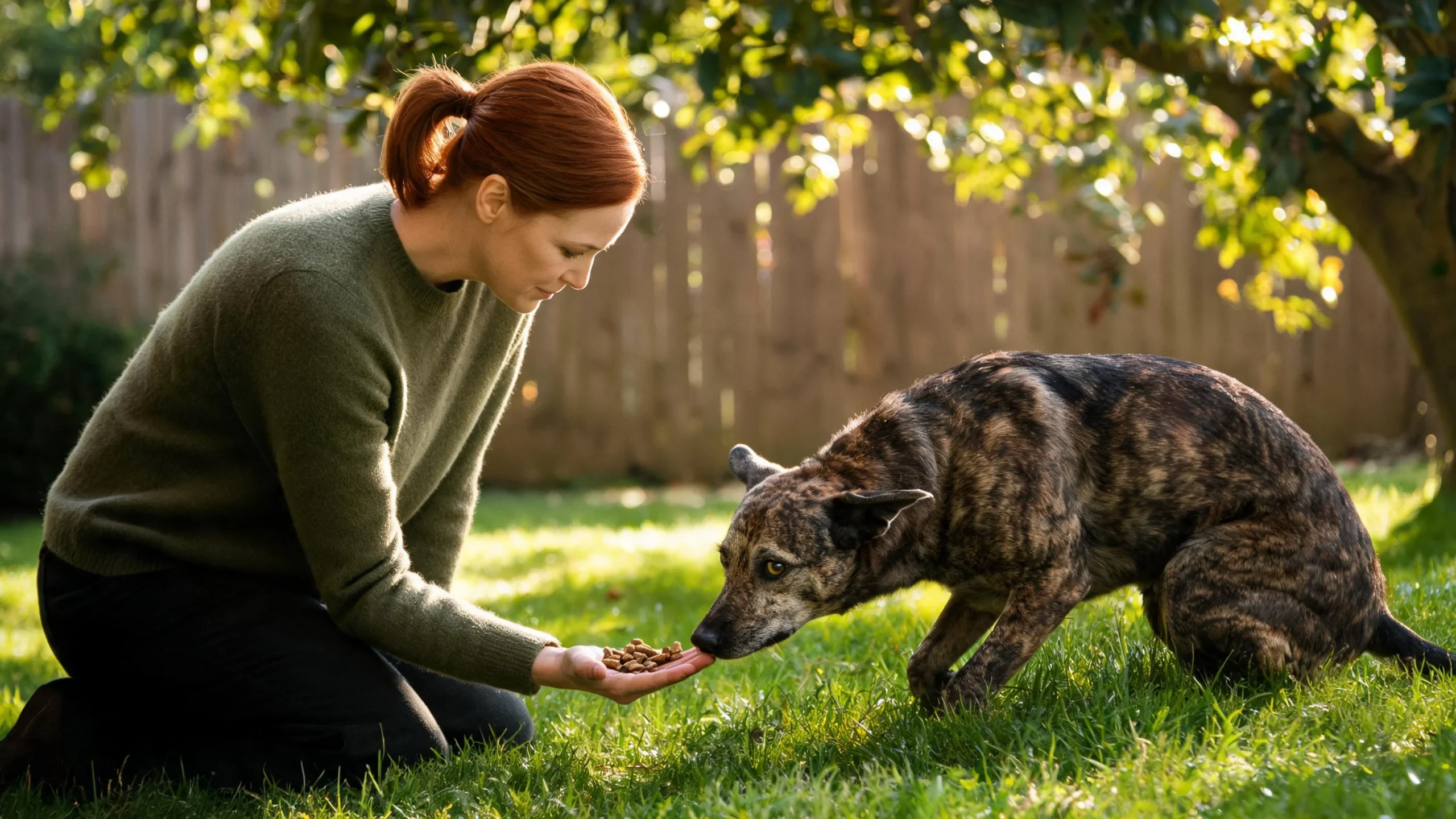
The fastest way to build confidence in a fearful foster dog is controlled, low-intensity exposure paired with high-value rewards. This method — called desensitization and counter-conditioning — changes how a dog feels about scary things by linking them to something good.
- Start with the dog’s safe space: a crate, corner, or quiet room they can retreat to freely.
- Use high-value treats like small pieces of chicken or cheese during every positive interaction.
- Keep early sessions short — five to ten minutes maximum to prevent overwhelm.
- Let the dog set the pace; never force approach or contact.
- Maintain a consistent daily routine so the dog can predict what happens next.
- Celebrate micro-wins: a tail wag, eye contact, or voluntary approach are all progress.
What Does Fear Actually Look Like in a Foster Dog?

Fear shows up differently in every dog. Some freeze completely and shut down — a behavior frequently seen in shelter dogs like Alex, described on Reddit’s r/National_Pet_Adoption as a dog who trembled and hid in his kennel, facing euthanasia not for aggression but purely for fear.
Other dogs pace, pant, or try to escape. Knowing the signs helps you respond correctly instead of accidentally pushing the dog past their limit.
Get Free Patterns Every Week!
Get new patterns, videos & tutorials free in your inbox
🔒 No spam. Unsubscribe anytime.
Common Fear Signals to Watch For
- Trembling or shaking when approached
- Tucked tail and flattened ears
- Yawning, lip-licking, or turning away (calming signals)
- Refusing food — a strong indicator of extreme stress
- Hiding behind furniture or in corners
- Low, slow movement or complete freezing
A dog who refuses treats is too stressed to learn. Always back off and give more space before trying again.
Week-by-Week Guide to Building Confidence in a Fearful Foster Dog

This timeline is a framework, not a rigid schedule. Some dogs move faster; many need more time. The goal is forward progress, however slow.
BEFORE YOU SCROLL PAST
Quick Reads You’ll Love: 👇
👉 Can You Power Tool Specific Items Essebtials
Week 1: Safety and Decompression
Do not push interaction in the first week. Let the dog decompress in a quiet room with a covered dog crate they can use as a den. Avoid loud noises, guests, and overwhelming attention.
Sit near the dog’s space without making direct eye contact. Toss treats toward them without expecting approach. This builds the first association: your presence equals good things.
Week 2: Establishing Routine and Trust
Predictability is your most powerful tool in week two. Feed meals at the same times, take the same walking route, and use the same calm voice every time.
Begin very short, structured sessions using a dog training clicker to mark the exact moment the dog does something brave — sniffing your hand, stepping forward, making eye contact. Click and reward immediately.
Week 3: Introducing Simple Commands
Simple commands give fearful dogs a job to do, which builds confidence quickly. Start with “sit” or “hand target” (touching their nose to your palm). Keep sessions to five minutes, twice a day.
According to the American Kennel Club, positive reinforcement training not only teaches behaviors but actively reduces anxiety by giving dogs a sense of control over their environment. That sense of control is exactly what fearful dogs lack.
Week 4: Expanding the Dog’s World Slowly
Gradually introduce new environments, always starting at the edge — the doorway before the room, the sidewalk before the park. Pair every new experience with treats and calm praise.
Use a dog anxiety wrap vest during particularly challenging outings. Some dogs respond well to the gentle, consistent pressure during stressful situations.
Weeks 5–8: Confidence Exercises and Gentle Challenges
By week five, most foster dogs are ready for low-stakes confidence exercises. These activities teach dogs they can solve problems — a key shift from helpless fear to self-assurance.
- Nose work: Hide treats under cups or in a snuffle mat and let the dog find them independently.
- Obstacle navigation: Set up a simple course using boxes, low poles, or tunnels to encourage movement through novel environments.
- Controlled social exposure: Introduce one calm, dog-savvy person at a time — never a group.
- Off-leash exploration: In a safely fenced area, allow free sniffing without a handler guiding every move.
Independent problem-solving is one of the fastest confidence builders available — let the dog figure things out without rescuing them immediately.
How Do You Compare Training Approaches for Fearful Foster Dogs?
Not every method works the same way. Here is how the main approaches stack up for fearful dogs specifically.
| Approach | Best For | Risk Level | Speed of Results |
|---|---|---|---|
| Desensitization + Counter-Conditioning | All fear types | Low | Moderate (weeks to months) |
| Positive Reinforcement Training | Shut-down or avoidant dogs | Very Low | Moderate |
| Flooding (forced exposure) | Not recommended | Very High | Can worsen fear permanently |
| Nose Work / Scent Games | Dogs too scared for direct interaction | Very Low | Fast for engagement |
| Routine-Based Calm Training | Dogs with unpredictable backgrounds | Very Low | Slow but deeply effective |
Flooding — forcing a dog to face a fear until they stop reacting — is widely rejected by veterinary behaviorists because it frequently causes lasting psychological damage rather than resolution.
What Mistakes Do Foster Caregivers Make With Fearful Dogs?
- Moving too fast: Introducing guests, new dogs, or outings in week one overwhelms a dog that needs decompression first. Slow down and let the dog lead the timeline.
- Flooding without realizing it: Holding or restraining a trembling dog to “comfort” them forces unwanted contact. It often escalates fear rather than reducing it.
- Punishing fear responses: Scolding growling or hiding removes the dog’s ability to communicate distress. This can lead directly to biting without warning.
- Inconsistent routine: Changing feeding times, walk schedules, or sleeping arrangements resets a fearful dog’s fragile sense of safety. Consistency is a non-negotiable foundation.
- Expecting linear progress: Fearful dogs have good days and bad days. A regression after a loud storm or a new visitor is normal — not failure. Return to basics and move forward again.
When Should You Ask for Professional Help With a Fearful Foster Dog?
Some fearful dogs need support beyond what a foster caregiver can provide alone. Contact your rescue organization or a certified professional immediately if the dog shows any of the following.
- Growling, snapping, or biting when approached, even gently
- Refusing all food for more than 48 hours
- Self-harming behaviors like excessive licking, chewing, or scratching
- No measurable improvement after four to six weeks of consistent work
A veterinary behaviorist certified by the American College of Veterinary Behaviorists can assess whether medication, in addition to training, would help the dog make faster and safer progress. Medication does not sedate — it reduces baseline anxiety enough for learning to happen.
If your foster dog also has underlying health concerns that affect their stress levels, understanding how physical health intersects with behavior is worth exploring. Dogs managing chronic conditions can show heightened fear responses, similar to what caregivers encounter when navigating dental surgery for a dog with a heart murmur — where underlying vulnerability shapes every decision.
Frequently Asked Questions About How to Build Confidence in a Fearful Foster Dog: A Week-by-Week Guide
How long does it take for a fearful foster dog to gain confidence?
Most fearful foster dogs show measurable improvement within four to eight weeks of consistent, positive work. Severely traumatized dogs may take six months or longer to reach a stable baseline of confidence.
Should I let a fearful foster dog hide?
Yes — letting a fearful foster dog hide is correct in early days. Forcing them out of their safe space increases stress and erodes trust. Allow hiding while making the surrounding environment as positive as possible.
Can fearful foster dogs be socialized with other dogs?
Fearful foster dogs can be socialized with other dogs, but only with calm, friendly dogs in low-pressure settings. One calm dog at a time works best; avoid dog parks entirely in early weeks.
Is it okay to comfort a scared foster dog?
Comforting a scared foster dog with a calm voice or gentle presence is fine. You cannot reinforce fear by offering comfort — that is a common myth. Forced physical contact, however, often increases fear.
What treats work best for building confidence in fearful dogs?
High-value, soft treats work best for fearful dogs because they are fast to eat and easy to deliver. Chicken, cheese, or commercial soft training treats consistently outperform kibble in high-stress training moments.
What if my foster dog won’t eat treats at all?
A foster dog refusing all treats is showing extreme stress — the environment is too overwhelming. Remove the trigger, give the dog space, and try again in a quieter setting with a softer, smellier treat option.
The One Thing That Changes Everything for Fearful Foster Dogs
Patience paired with consistency is the single most effective tool you have. Every positive experience stacks on the last one, building a new emotional baseline over time.
Start today by setting up one quiet, retreat-safe space with a bolstered orthopedic dog bed and sitting nearby without demands. That one small act begins building the trust that everything else depends on.
Fear is not a character flaw — it is a response to experience. And experience, delivered with kindness, is exactly how you change it.