
Great Dane Mix Puppy Exercise Guidelines By Age
Your Great Dane mix puppy can look big, clumsy, and full of energy all at once. That mix makes exercise feel tricky, because giant-breed puppies need movement for health and training, but too much impact can stress growing joints.
Great Dane Mix Puppy Exercise Guidelines by Age should balance short, frequent activity with lots of sleep, calm play, and steady growth monitoring. If you are also setting routines for rest and potty breaks, this puppy sleep schedule by age and this puppy bladder guide by age help the full day fit together.
How Much Exercise Does a Great Dane Mix Puppy Need by Age?
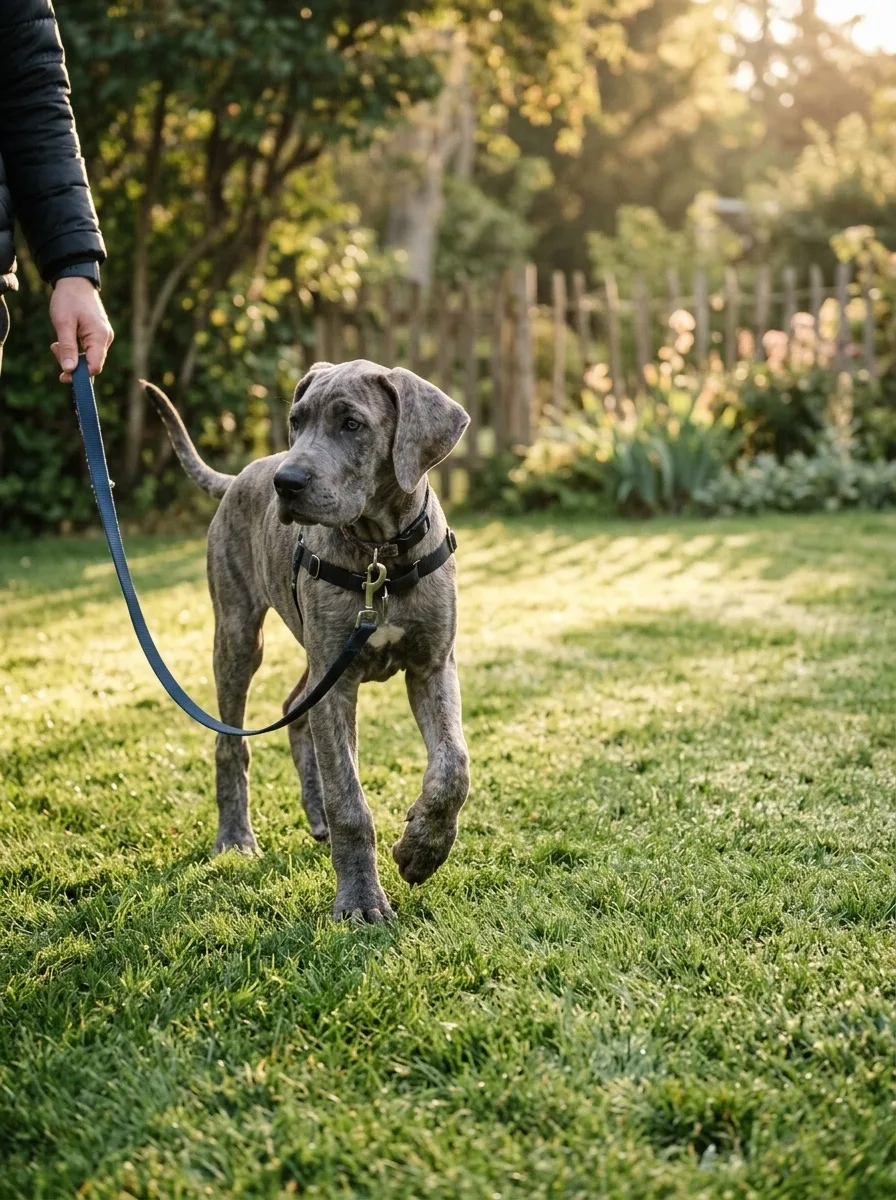
A Great Dane mix puppy usually needs several short activity periods each day, not one long workout. The safest rule is to match exercise to age, growth rate, and body condition while limiting repetitive high-impact activity.
Large and giant breeds mature slowly, and growth plates stay open longer than in small dogs. That is why many veterinarians and giant-breed clubs advise controlled play, leash walks sized to the puppy’s age, and avoiding forced running beside a bike or jogger.
- 8 to 12 weeks: 5 to 10 minutes at a time, several times daily.
- 3 to 4 months: 10 to 15 minutes at a time, 3 to 5 times daily.
- 4 to 6 months: 15 to 20 minutes at a time, plus free play.
- 6 to 12 months: 20 to 30 minutes at a time, adjusted for build and stamina.
- Skip repetitive jumping, stairs marathons, and hard-surface distance running.
Think in short sessions, soft surfaces, and plenty of recovery.
The American Kennel Club notes that Great Danes are giant dogs with a long growth period, and giant-breed puppies should not be over-exercised while their bones and joints develop. The Orthopedic Foundation for Animals also explains that growth plates are vulnerable during puppyhood, especially in large breeds.
Why Is Exercise Different for Great Dane Mix Puppies?
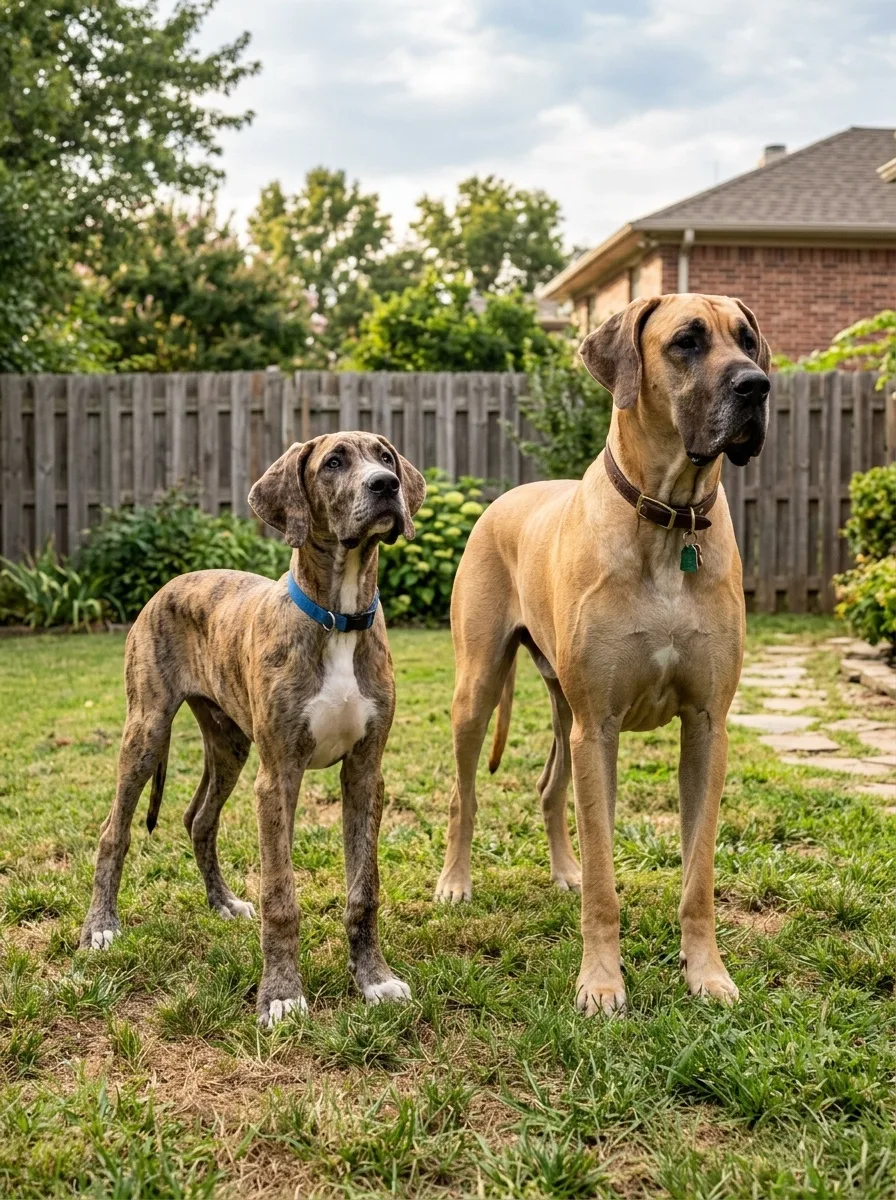
Exercise is different for Great Dane mix puppies because their size increases faster than their coordination. A puppy may look ready for long walks before the skeleton, joints, and muscles are ready to handle repeated impact.
BEFORE YOU SCROLL PAST
Quick Reads You’ll Love: 👇
👉 Can You Power Tool Specific Items Essebtials
Great Dane mixes can also inherit traits from the other parent breed, which changes stamina and play style. A Dane-Lab mix may act more driven than a Dane-Mastiff mix, but both still need giant-breed joint protection.
| Factor | Why It Matters | What To Do |
|---|---|---|
| Rapid growth | Bones lengthen before muscles fully support them | Use short, controlled sessions |
| Open growth plates | Too much impact can irritate developing joints | Avoid hard landings and distance running |
| Mixed genetics | Energy level may be higher or lower than a pure Dane | Adjust duration to the puppy, not the chart alone |
| Heavy body size | Extra weight increases joint load | Keep body condition lean and use low-impact play |
What the research says about giant-breed growth
Peer-reviewed veterinary work has shown that nutrition and growth rate matter a great deal in large and giant breeds. Overfeeding and excess weight can raise orthopedic risk, which means exercise plans work best when paired with proper growth management.
The World Small Animal Veterinary Association and veterinary nutrition researchers have long advised keeping large-breed puppies lean during growth. For some homes, using a slow-feeder bowl such as an slow feeder dog bowl can help prevent bolting meals and support better portion control.
Giant-breed puppies need movement for muscle development and learning, but repeated impact and excess body weight make joint stress worse.
What Are Safe Exercise Guidelines for Each Age Stage?
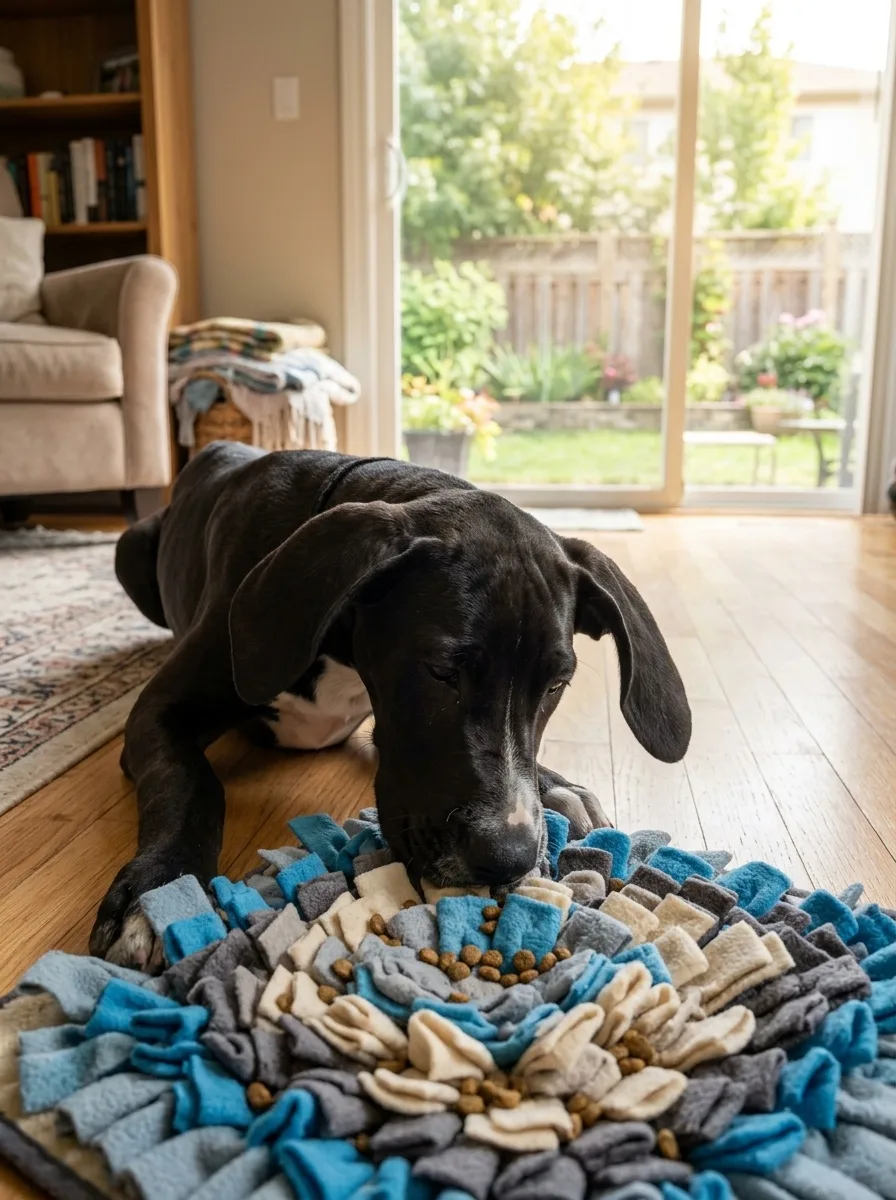
Safe Great Dane mix puppy exercise changes every few months because growth is so fast in the first year. Use age stages as a starting point, then adjust based on coordination, recovery, and your veterinarian’s advice.
8 to 12 weeks
At this stage, your puppy needs exploration more than exercise. Think short indoor play, a few minutes in the yard, gentle leash introductions, and lots of nap time.
Use toys that encourage short bursts instead of wild jumping. A soft puppy rope toy can work for brief tug sessions if you keep the toy low and avoid jerking upward.
- 5 to 10 minutes of activity at a time
- 3 to 6 mini sessions spread through the day
- Flat ground only
- No dog-park roughhousing with larger dogs
3 to 4 months
Your puppy can handle slightly longer walks and more training games, but fatigue still arrives fast. Stop before the puppy starts lagging, flopping down, or getting extra mouthy.
This is a good age for confidence-building walks, name games, recall practice, and gentle sniffing routes. If nights are rough after busy evenings, a calmer bedtime plan can help, and this guide on stopping puppy crying in the crate at night fits well with an age-based routine.
4 to 6 months
Many Great Dane mixes hit a lanky, awkward phase here. They may seem stronger, but joints are still developing, so the goal is longer controlled movement, not athlete-level effort.
Try 15 to 20 minute leash walks on grass or other forgiving surfaces. Add food puzzles, easy scent games, and short training sets to tire the brain without pounding the body.
6 to 12 months
Most Great Dane mixes can enjoy longer walks and more structured play during this stage, but they are still not ready for repetitive endurance work. Keep impact low, avoid forced running, and build fitness slowly.
A tired giant-breed puppy should look relaxed and ready to nap, not sore the next morning.
| Age | Typical Session Length | Best Activities |
|---|---|---|
| 8-12 weeks | 5-10 minutes | Gentle play, yard exploring, leash intro |
| 3-4 months | 10-15 minutes | Short walks, sniffing, basic training |
| 4-6 months | 15-20 minutes | Controlled walks, puzzle play, recall games |
| 6-12 months | 20-30 minutes | Longer walks, low-impact play, training circuits |
Which Types of Exercise Are Best for a Great Dane Mix Puppy?
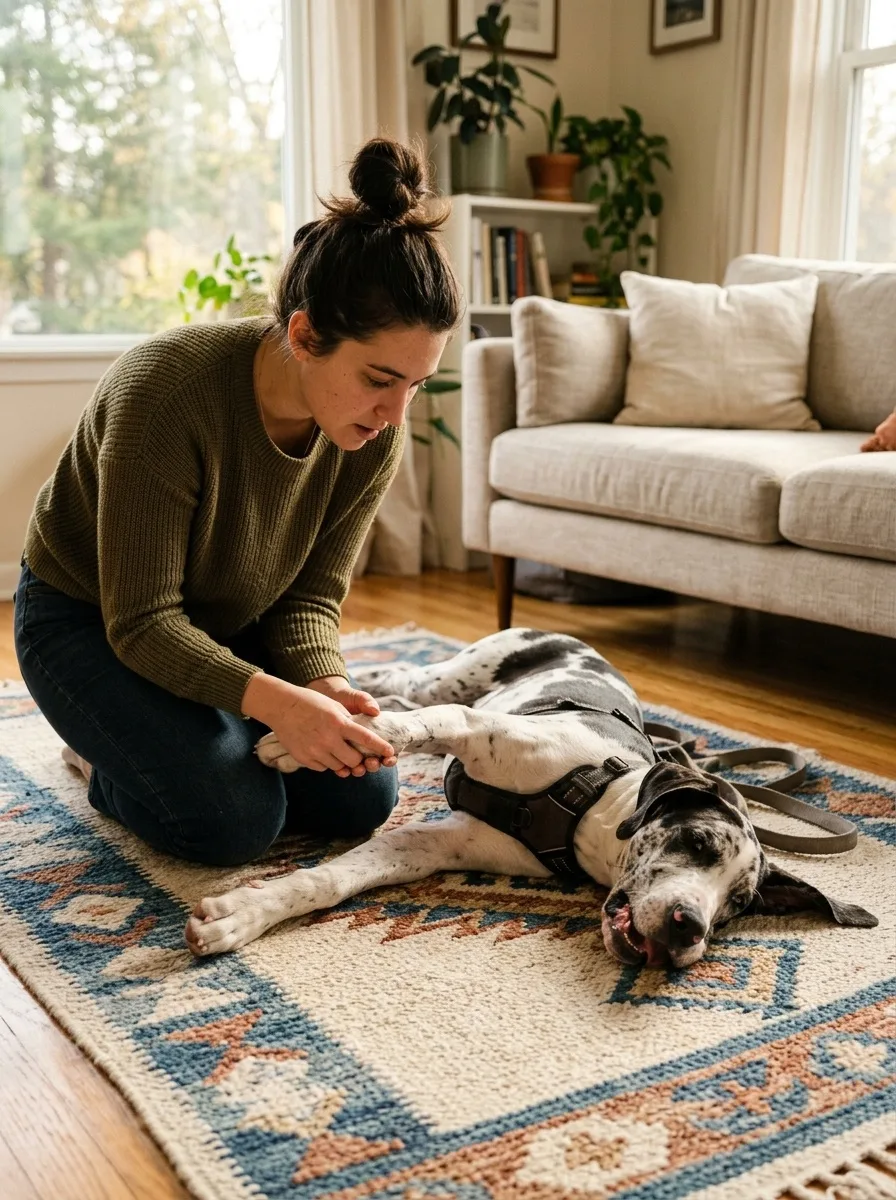
The best exercise for a Great Dane mix puppy is low-impact, varied, and easy to stop when the puppy tires. Short walks, free sniffing, basic training, and controlled play usually beat fetch marathons and repeated jumping.
Variety matters because mental work can reduce restlessness without adding joint stress. Five minutes of problem-solving can tire some puppies more than another lap around the block.
Low-impact choices that work well
- Loose-leash walks on grass
- Sniff walks where the puppy sets the pace
- Short recall games in a fenced area
- Find-it games with kibble or treats
- Basic cues like sit, touch, and settle
Indoor enrichment helps on hot days, which matters because Great Dane mixes can overheat faster than many smaller dogs. A snuffle mat for dogs can turn part of dinner into a low-impact work session.
Activities to limit or skip during growth
Repeated hard stops, sharp turns, and landing from height put more force through growing joints. That means long stair sessions, endless ball chasing, high jumps, and distance jogging should wait until your veterinarian says your dog is ready.
Swimming can be useful for some puppies if the introduction is gradual and supervised, but not every Great Dane mix is a natural swimmer. For safety, use a well-fitted dog life jacket in pools, lakes, or boating situations.
For giant-breed puppies, controlled movement builds better habits than chaotic high-impact play.
How Can You Tell If Your Puppy Is Getting Too Much or Too Little Exercise?
A Great Dane mix puppy getting too much exercise often shows soreness, lagging, heavy panting, or reluctance to move later. Too little exercise usually looks like restless pacing, nuisance biting, repeated zoomies, and trouble settling even after training.
The target is a puppy that can play, learn, eat, and then sleep soundly. If your puppy is wired at night, review the whole routine, including daytime naps, potty timing, and meal schedule.
Signs of too much exercise
- Limping, stiffness, or bunny-hopping gait
- Refusing stairs or getting into the car
- Sleeping hard but waking sore
- Flopping down during normal walks
- Excessive panting long after activity ends
Signs of too little exercise
Under-exercised puppies often invent their own jobs. They may chew furniture, body-slam people, or keep pestering after what looked like a decent walk.
That does not always mean they need more miles. Many need better activity balance, with one short walk, one training game, one sniff session, and enough rest in between.
If you notice slipping on floors during play, traction can help prevent awkward falls. Something as simple as washable dog area rugs in high-traffic zones can make indoor movement safer.
When behavior changes after exercise, look at quality and recovery, not just minutes.
How Do You Build a Safe Daily Exercise Routine?
A safe daily routine for a Great Dane mix puppy pairs movement with meals, naps, training, and potty trips. The routine should feel predictable, because giant-breed puppies often handle growth better when their day is steady.
Use several short sessions instead of one big block. That protects the body and usually improves behavior.
- Start with a potty break and 5 to 15 minutes of age-appropriate movement. Success looks like loose, happy energy, not frantic zooming.
- Add a brief training session after exercise. Two to five minutes of cues, handling, or recall builds focus without pounding joints.
- Offer a meal or enrichment activity, then quiet time. Rest after activity helps recovery in fast-growing puppies.
- Repeat the cycle later in the day with a different activity type. Swap a walk for sniffing or puzzle work to reduce repetitive strain.
- End evenings with calm movement, not rough play. A slow leash walk or chew is better than last-minute fetch.
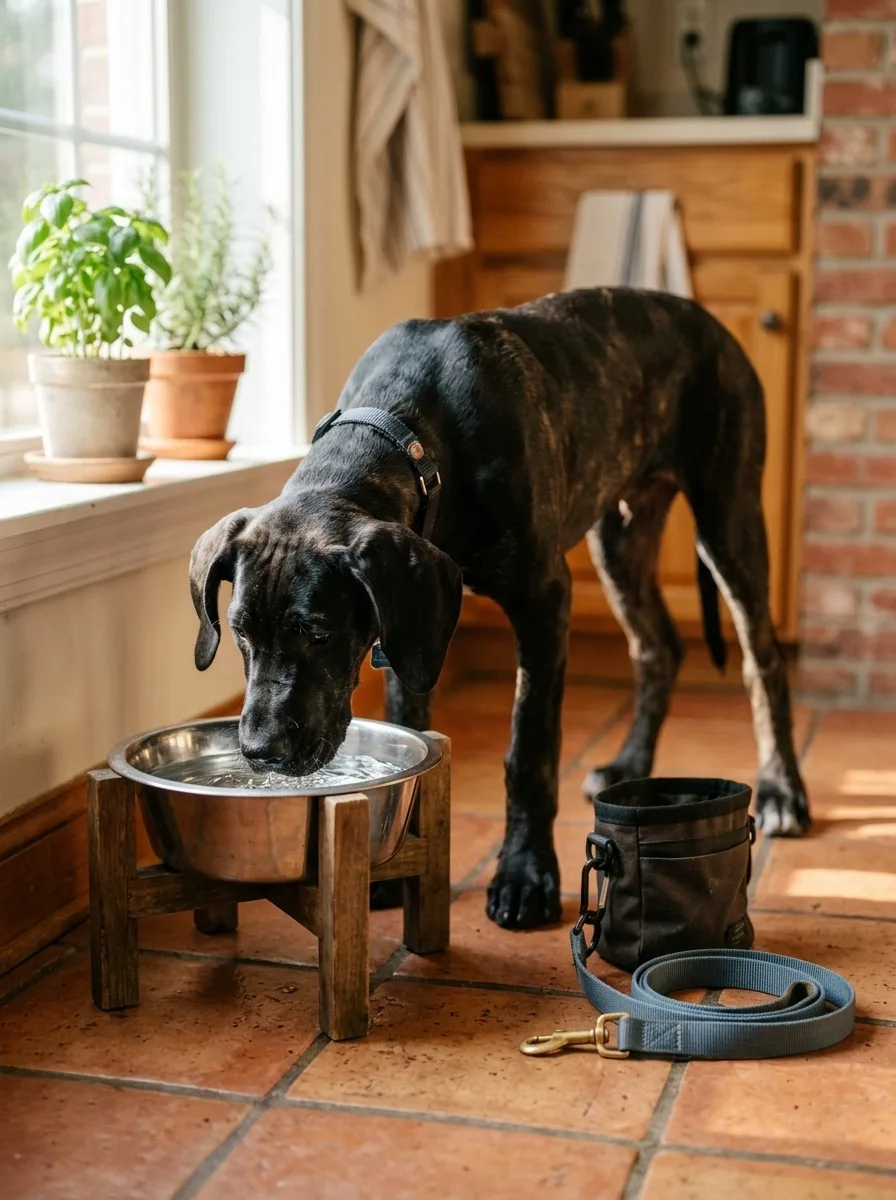
For many puppies, this pattern works well: potty, move, train, eat, rest. If your dog gulps water after play, a raised stainless steel dog water bowl placed in a quiet area can make cool-down time easier to manage.
Common mistakes
- Doing long weekend outings only: Big spikes in activity can leave a puppy sore. Keep exercise steady across the week.
- Using fetch as the main workout: Hard stops and turns add impact. Replace some fetch with sniff walks and training games.
- Waiting for the puppy to stop on their own: Many puppies play past fatigue. End sessions while energy is still smooth and controlled.
- Ignoring body condition: Extra weight increases joint load. Ask your veterinarian to score your puppy’s body condition during checkups.
- Copying small-breed advice: Great Dane mixes mature differently. Use giant-breed guidance, not a one-size-fits-all puppy plan.
For health guidance beyond exercise, the AAHA Canine Life Stage Guidelines and the Orthopedic Foundation for Animals hip health resources are worth bookmarking.veterinarian.